Modern SQL Server environments are more complex than ever. Enterprises manage thousands of tables, views, stored procedures, functions, ETL processes, reports, APIs, and applications that depend on each other. A single schema change can unexpectedly impact critical business processes, causing downtime, performance issues, or failed deployments.
This is where SQL Server Dependency Mapping becomes essential.
Dependency mapping provides a clear view of how database objects interact, enabling teams to perform safer changes, accelerate modernization initiatives, improve governance, and reduce operational risk.
In this guide, you’ll learn:
- What SQL Server dependency mapping is
- Why dependency analysis matters
- Common dependency challenges
- Best practices for dependency discovery
- How AI-powered platforms like DB Insights AI simplify dependency mapping at scale
What Is SQL Server Dependency Mapping?
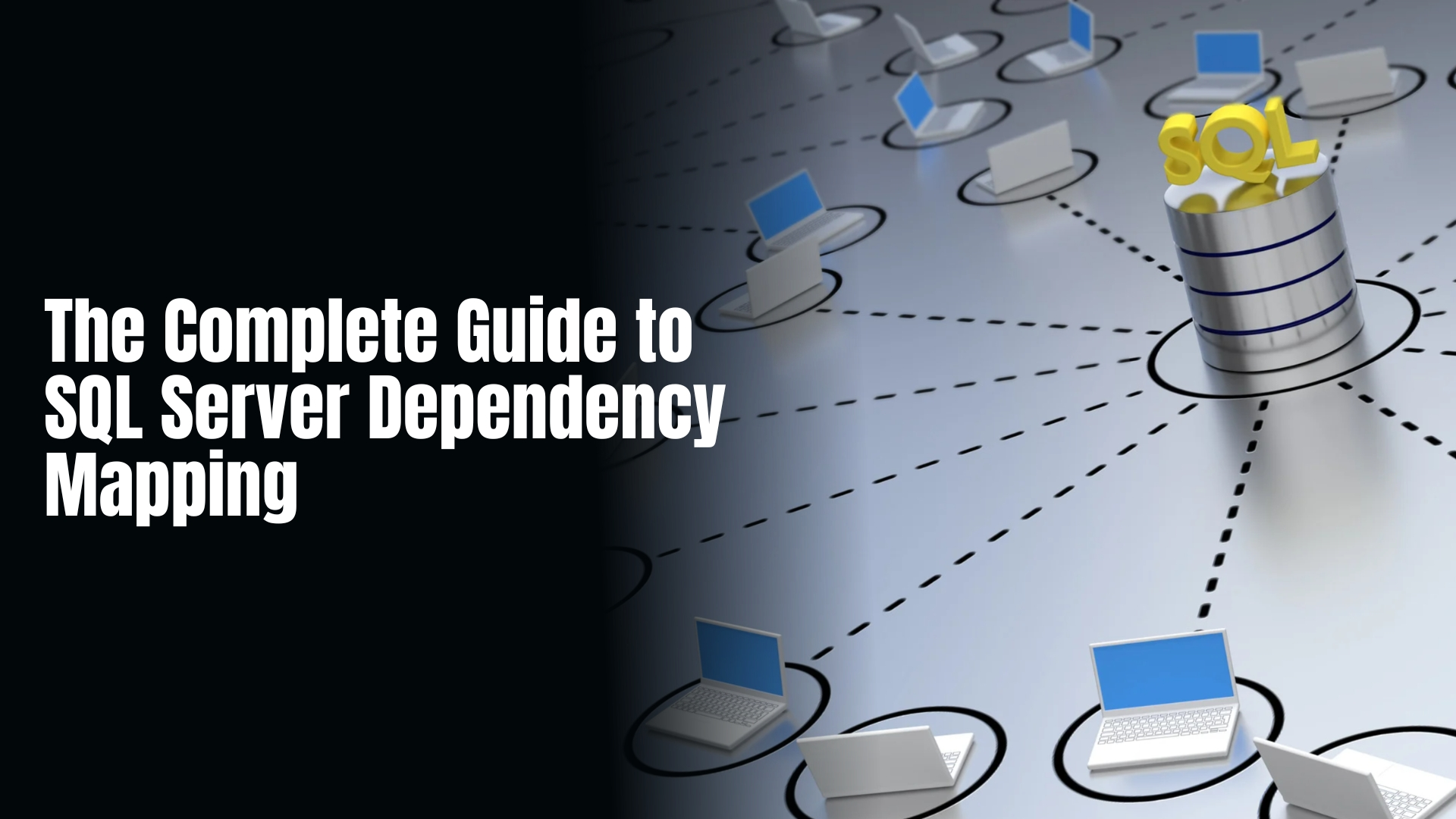
SQL Server dependency mapping is the process of identifying and visualizing relationships between database objects and external systems.
These dependencies may include:
Database Object Dependencies
- Tables
- Views
- Stored Procedures
- Functions
- Triggers
- Synonyms
- Sequences
Application Dependencies
- Web applications
- APIs
- Reporting systems
- Data warehouses
- ETL pipelines
- Business intelligence platforms
Cross-Database Dependencies
- Linked servers
- External data sources
- Replication environments
- Distributed queries
Dependency mapping answers critical questions such as:
- Which stored procedures use this table?
- What reports depend on this view?
- Which applications will break if a column changes?
- What downstream systems consume this data?
Database updates become dangerous and challenging to handle without precise dependence visibility.
Why SQL Server Dependency Mapping Matters
1. Reduce Deployment Risk
Many production incidents occur because hidden dependencies were overlooked.
For example:
A developer modifies a column datatype in a core customer table.
The change appears harmless.
However:
- 15 stored procedures fail
- 4 ETL jobs stop running
- Several dashboards display incorrect data
Dependency mapping reveals these relationships before deployment.
2. Improve Impact Analysis
Before implementing changes, teams must understand:
- What objects will be affected
- How severe the impact may be
- Which teams should be notified
Dependency analysis enables faster and more accurate impact assessments.
3. Accelerate Database Modernization
Organizations migrating to:
- Azure SQL
- SQL Managed Instance
- Microsoft Fabric
- Data Lake architectures
need complete dependency visibility to identify migration blockers and prioritize remediation efforts.
4. Strengthen Governance and Compliance
Regulated industries require clear data lineage and traceability.
Dependency mapping supports:
- Audit readiness
- Data governance
- Regulatory compliance
- Change management documentation
5. Improve Team Productivity
DBAs, architects, and developers spend significant time manually investigating dependencies.
Automated dependency discovery dramatically reduces investigation effort and speeds up development cycles.
Common SQL Server Dependency Challenges
Despite built-in SQL Server metadata, many organizations struggle to achieve complete visibility.
Dynamic SQL
Dynamic SQL often hides dependencies from traditional system catalogs.
Example:
EXEC('SELECT * FROM ' + @TableName)Traditional dependency tracking may not detect these relationships.
Cross-Database References
Many enterprise systems contain:
SELECT *
FROM SalesDB.dbo.Customers
Cross-database dependencies are difficult to track manually.
Legacy Systems
Older environments frequently contain:
- Unused procedures
- Orphaned tables
- Undocumented integrations
These hidden relationships create technical debt and deployment risk.
Rapid Schema Evolution
Agile development introduces frequent schema changes.
Without continuous dependency monitoring:
- Documentation becomes outdated
- Impact analysis becomes unreliable
- Production incidents increase
Native SQL Server Dependency Tracking Methods
SQL Server provides several built-in options.
sys.sql_expression_dependencies
This catalog view shows dependency relationships between SQL objects.
Example:
SELECT *
FROM sys.sql_expression_dependencies
Benefits:
- Easy access
- Built-in metadata
Limitations:
- Misses some dynamic SQL
- Limited visualization
- Difficult to analyze large environments
sys.dm_sql_referenced_entities
Used to identify objects referenced by a specific object.
Example:
SELECT *
FROM sys.dm_sql_referenced_entities
(
'dbo.usp_GetCustomer',
'OBJECT'
)
Useful for targeted dependency checks.
sys.dm_sql_referencing_entities
Finds objects that depend on a specific object.
Example:
SELECT *
FROM sys.dm_sql_referencing_entities
(
'dbo.Customers',
'OBJECT'
)
Useful when evaluating change impact.
The Limitations of Manual Dependency Analysis
As environments scale, manual approaches become insufficient.
Common issues include:
| Challenge | Impact |
| Thousands of objects | Difficult to analyze manually |
| Dynamic SQL | Hidden dependencies |
| Multiple databases | Incomplete visibility |
| Documentation gaps | Increased risk |
| Frequent changes | Outdated dependency maps |
Modern enterprises require automated dependency intelligence.
How AI-Powered Dependency Mapping Changes the Game
AI-powered platforms can analyze SQL environments far beyond native metadata.
Advanced dependency mapping solutions identify:
- Hidden object relationships
- Data lineage
- Cross-system dependencies
- Redundant objects
- Change impact paths
- Modernization opportunities
This provides a complete dependency graph across the database ecosystem.
Key Features of Effective SQL Server Dependency Mapping
When evaluating dependency mapping solutions, look for the following capabilities.
Automated Discovery
Automatically identify:
- Tables
- Views
- Procedures
- Functions
- Triggers
- ETL dependencies
without manual effort.
Dependency Visualization
Visual diagrams help teams understand complex relationships instantly.
Visual dependency graphs improve:
- Change planning
- Troubleshooting
- Architecture reviews
Impact Analysis
Before modifying an object, teams should instantly see:
- Direct dependencies
- Indirect dependencies
- Downstream applications
- Potential risk areas
Data Lineage Tracking
Lineage tracking reveals:
Source → Transformation → Target
This is essential for:
- Data governance
- Compliance initiatives
- Analytics reliability
AI-Powered Recommendations
Advanced solutions use AI to:
- Detect anomalies
- Identify risky dependencies
- Suggest optimization opportunities
- Accelerate root cause analysis
SQL Server Dependency Mapping Use Cases
Database Change Management
Understand impact before deploying schema changes.
Benefits
- Reduced outages
- Faster approvals
- Improved release confidence
Cloud Migration Projects
Map dependencies before migrating to:
- Azure SQL Database
- Azure Managed Instance
- Microsoft Fabric
- Snowflake
Benefits
- Reduced migration risk
- Better project planning
- Faster execution
Performance Optimization
Dependency visibility helps identify:
- Redundant objects
- Unused tables
- Inefficient query paths
Data Governance Initiatives
Dependency mapping supports:
- Data lineage
- Regulatory compliance
- Data ownership tracking
Why Enterprises Choose DB Insights AI for Dependency Analysis
Traditional database analysis tools often provide fragmented visibility.
DB Insights AI delivers a more intelligent approach by combining:
- AI-powered metadata analysis
- Automated dependency discovery
- Impact assessment
- Data lineage visualization
- Database modernization insights
Best Practices for SQL Server Dependency Mapping
Maintain Continuous Discovery
Dependencies change constantly.
Automated scanning ensures dependency maps remain accurate.
Integrate Dependency Analysis into CI/CD
Before deployment:
- Run dependency validation
- Assess impact
- Flag high-risk changes
Monitor Cross-System Dependencies
Don’t limit visibility to SQL Server alone.
Include:
- ETL platforms
- APIs
- Reporting tools
- Cloud services
Prioritize Business-Critical Assets
Focus first on:
- Revenue-generating applications
- Customer-facing systems
- Regulatory data environments
The Future of SQL Server Dependency Mapping
As enterprise data ecosystems become increasingly distributed, dependency analysis is evolving from a DBA task into a strategic business capability.
Future platforms will leverage AI to:
- Predict change impact
- Detect hidden risks
- Recommend remediation actions
- Automate governance workflows
Organizations that invest in dependency intelligence today will be better positioned to modernize faster, reduce operational risk, and unlock greater value from their data assets.
Conclusion
SQL Server dependency mapping is no longer optional for organizations managing complex database environments.
Accurate dependency visibility enables:
- Safer deployments
- Faster troubleshooting
- Better governance
- Successful cloud migrations
- Improved database modernization outcomes
AI-powered solutions like DB Insights AI help organizations move beyond manual dependency tracking by providing intelligent insights, automated discovery, and comprehensive dependency analysis across the entire data ecosystem.
Ready to gain complete visibility into your SQL Server environment?
Explore DB Insights AI and discover how AI-powered dependency mapping can transform database operations:
FAQs
What is SQL Server dependency mapping?
SQL Server dependency mapping is the process of identifying and visualizing relationships between database objects such as tables, views, stored procedures, functions, and applications. It helps teams understand how changes to one object may impact others across the database ecosystem.
Why is dependency mapping important in SQL Server?
Dependency mapping helps prevent deployment failures, reduces downtime, improves impact analysis, supports compliance initiatives, and enables safer database modernization and migration projects.
How can I find dependencies in SQL Server?
SQL Server provides built-in tools such as sys.sql_expression_dependencies, sys.dm_sql_referenced_entities, and sys.dm_sql_referencing_entities to identify object relationships. However, these methods may not capture all dependencies, especially those involving dynamic SQL or external systems.
What are the challenges of manual dependency analysis?
Manual dependency analysis can miss hidden relationships, dynamic SQL references, cross-database dependencies, and undocumented integrations. As environments grow larger, maintaining accurate dependency documentation becomes increasingly difficult.
How does DB Insights AI improve SQL Server dependency mapping?
DB Insights AI automates dependency discovery, visualizes complex relationships, performs impact analysis, tracks data lineage, and uses AI-powered insights to identify risks and optimization opportunities, helping organizations manage database changes with greater confidence.